What if the hardest fly fishing in the world is not about numbers, but about patience, restraint, and waiting all day for one real chance? That is the game today’s guest lives in.
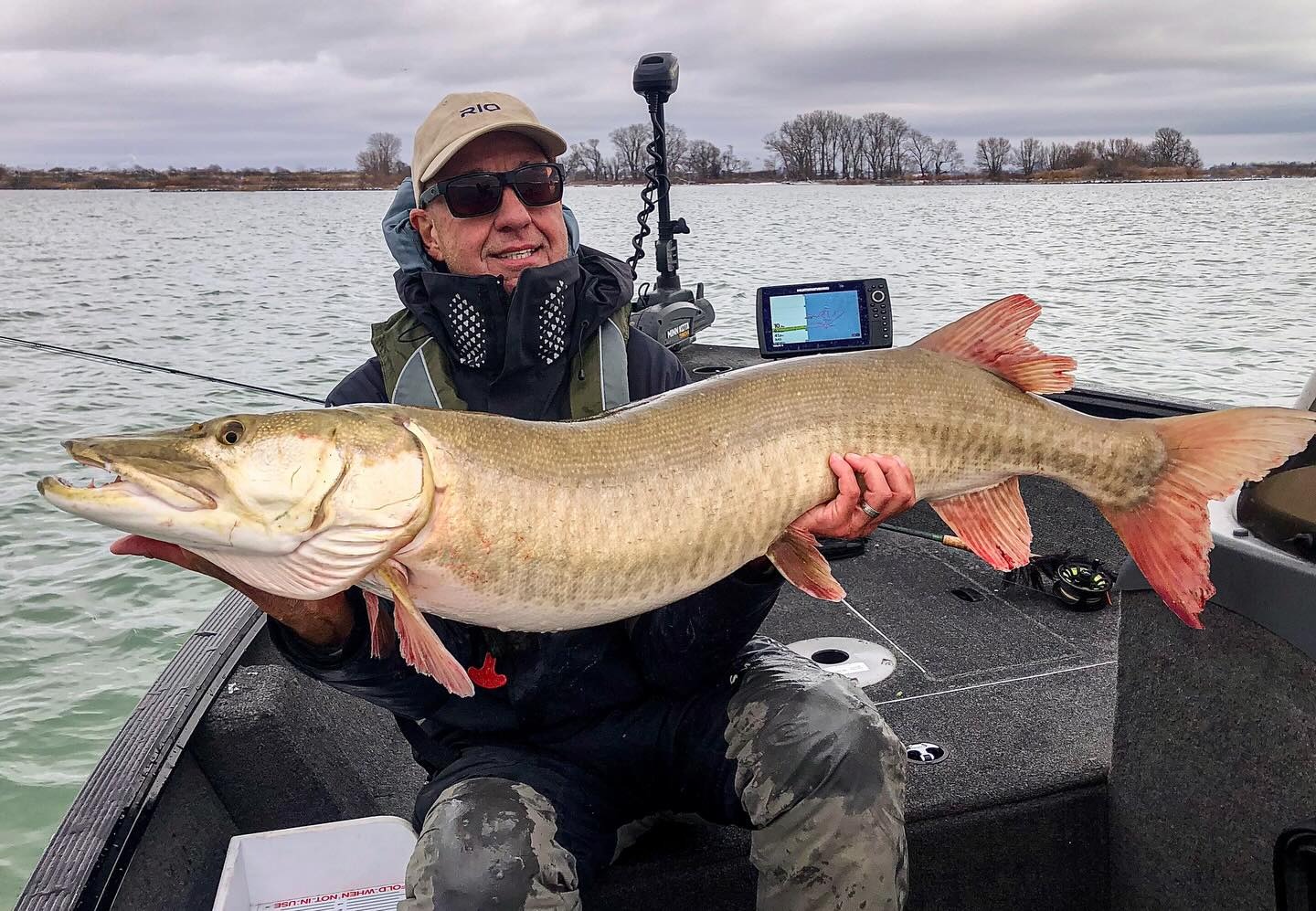
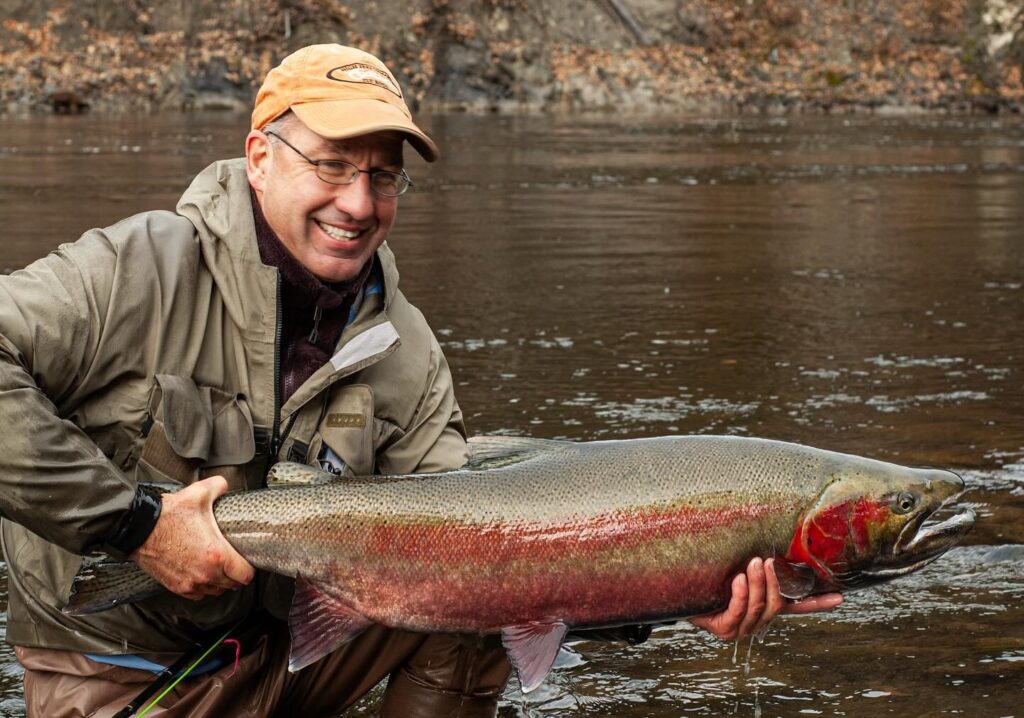
Rick Kustich is back on the podcast. Rick has spent decades chasing some of the toughest fish on the planet, from Great Lakes steelhead and giant muskie to Atlantic salmon and windswept rivers in Patagonia.
He breaks down why strategy matters more than repetition, how small adjustments change everything, and what it really takes to fish at the highest level.
In this episode, Rick shares what he’s learned from decades of muskie, steelhead, and trophy trout fishing, why modern Spey systems are evolving, and how he’s thinking about Atlantic salmon and future trips.
We also announce a brand-new podcast series Rick will be hosting, focused on apex predators and high-level strategy.
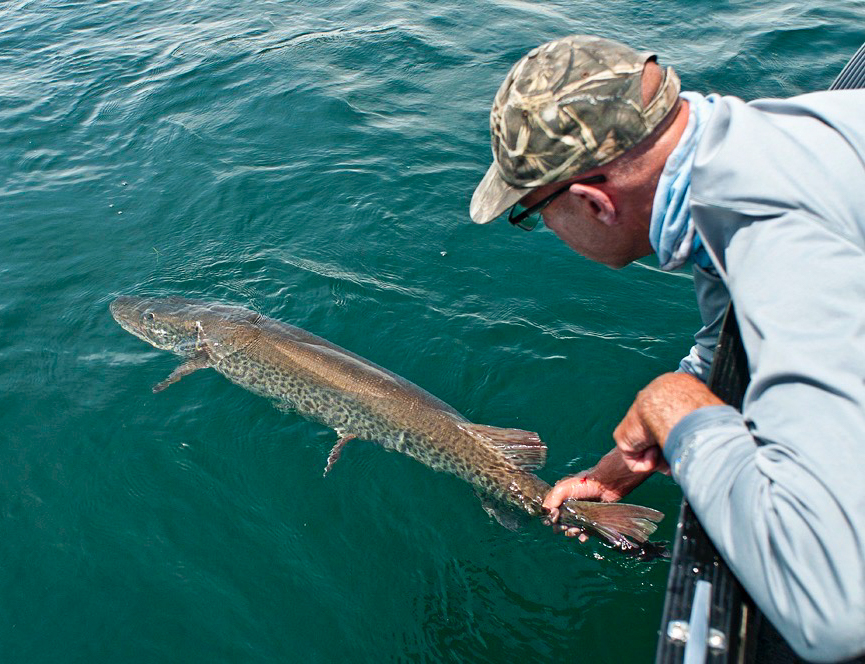
We kick things off by looking back at the past year, which Rick describes as wide and varied despite challenging weather. He spent time in Argentina chasing sea-run brown trout, guided steelhead in the Great Lakes region, and logged another solid personal muskie season.
Rick is still running a strong steelhead program, split between spring and fall. Spring typically runs from February through April or early May, while fall has been shifting later over the past few years. Instead of early October, good fishing is now more common from mid to late October through the December ice-up.
I asked Rick about Atlantic salmon and whether he’s been fishing them much lately, especially with this upcoming trip to Mountain Waters Resort we’ve been talking about. He says it’s been a few years since he’s chased Atlantic salmon, but he’s genuinely fired up about this upcoming Newfoundland trip.
A big part of that excitement is the history tied to Mountain Waters Resort. This is water that legends like Lee Wulff fished, studied, and wrote about, and that connection still carries real weight for Rick.
He talks about growing up in the early 1970s, when fly fishing knowledge was almost entirely derived from books and magazines, and writers like Joe Brooks and Lee Wulff shaped his thoughts about fishing and his dreams of where he wanted to go.
If you want a deeper look at Mountain Waters and the crew behind it, we already broke it all down with Ryan and Les Wentzell and Rod Brophy. Listen to that episode here before this Atlantic salmon trip comes together.
One of the big announcements in this episode is that Rick will be hosting his own series with us. The focus is on top-end fish like musky and trophy trout, where success is about strategy and patience, not numbers. Rick wants to dig into the mental side, technique, and the small adjustments that matter when you’re hunting fish that don’t give many chances.
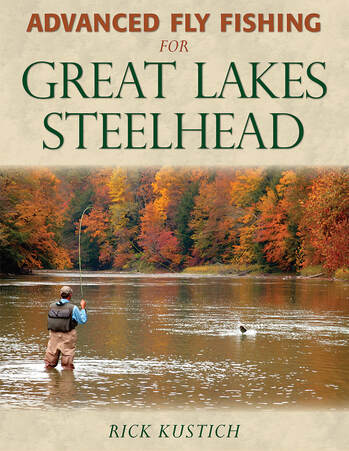
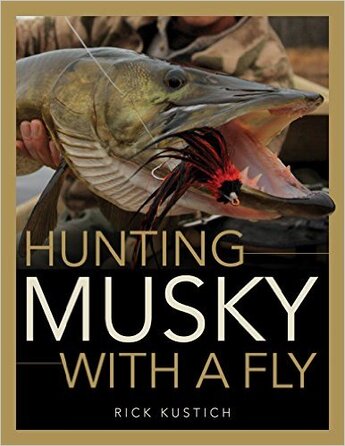
Rick has written several books over the years, starting back in the early 1990s, including Fly Fishing the Great Lakes Tributaries and later Hunting Musky with the Fly. He talks about how much has changed since that musky book came out in 2017, especially in the last five or six years.
This new podcast series gives him a way to expand on those ideas, share what he’s doing differently now, and bring in other anglers to talk about muskie, trophy trout, and other predator fisheries across the country.
But Rick’s new podcast series won’t just be about musky. It will dig into predator fish in general, like trophy brown trout, and how these fish hunt and position themselves.
We also talk about the two-handed Spey masterclass with Rick. This is more of a teaching-style session, focused on how Spey casting actually helps you fish better, not just make prettier casts.
I asked Rick how anglers can actually practice these Spey fundamentals, especially when it’s cold or they can’t get on moving water. He’s clear that there’s no real substitute for water, but it doesn’t have to be a river.
Rick says a pond or stillwater works just fine, especially early on. One of the best things to practice is the forward Spey motion, since every cast ends there anyway. If you lock that in and build muscle memory, everything else comes easier. You can even change casting angles on stillwater just by changing direction.
On timing, Rick says practice matters more than people think. If he’s been off the water for a few weeks, his rhythm gets off too.
Rick talked through how Spey setups have shifted and why ultra-short heads are not always the answer. He likes a setup that gives control, keeps the anchor solid, and stays stealthy when needed.
We’re doing a trivia question for this episode, and the winner gets a book from Rick.
Episode Transcript
WFS 882 Transcript
00:00:00 Dave: What if the most demanding fly fishing in the world isn’t about numbers, but about patience, restraint, and committing to fish? That might only give you one real shot all day? Today’s guest has spent decades hunting the hardest freshwater fish on the planet, from Great Lakes steelhead to giant muskie, from Patagonia’s windswept rivers to historic Atlantic salmon fishing. Rick Huestis joins us to talk about what it really takes to fish at the top end, how strategy matters more than repetition, and why small adjustments separate success from long, empty days on the water. This is the Wet Fly Swing podcast, where I show you the best places to travel to for fly fishing, how to find the best resources and tools to prepare for the big trip, and what you can do to give back to the fish species we all love. Today Rick is back. He’s going to take us into his world, what he’s been up to chasing Muskie and some of his other trophy trips. He’s been out and about. We’re going to find out how two handed rods in modern space systems are evolving and how we’re going to prepare for that next Atlantic salmon trip. We’re going to find out also about a brand new podcast series we got going with Rick. This is a big, uh, big surprise here. We’re unleashing today. Uh, Rick is going to be hosting some episodes on this podcast. So we talk about that and what that’s going to look like. All right. Well, let’s get into it. Without further ado, here he is, Rick. And, uh, let’s get into it. How’s it going, Rick?
00:01:26 Rick: Great. Dave. Always, uh, very good to talk with you.
00:01:29 Dave: Yeah, yeah, this is going to be a fun one today. It’s been a little while since we chatted last. I think it was episode six hundred fifty four. We talked about Muskie, and that was back in twenty four fall of twenty four. So we’re probably going on like a year and a half. I want to get caught up first. Today we’re going to talk about we’ve got a couple big announcements today. I think, you know, we talked a little bit about a trip we’re planning in the future. But also we’ve got a podcast, a new thing we’re going to announce today, which is exciting. But take us back before we get into all that. just what have you been up to since kind of late? Twenty four. What’s this last year been like for you?
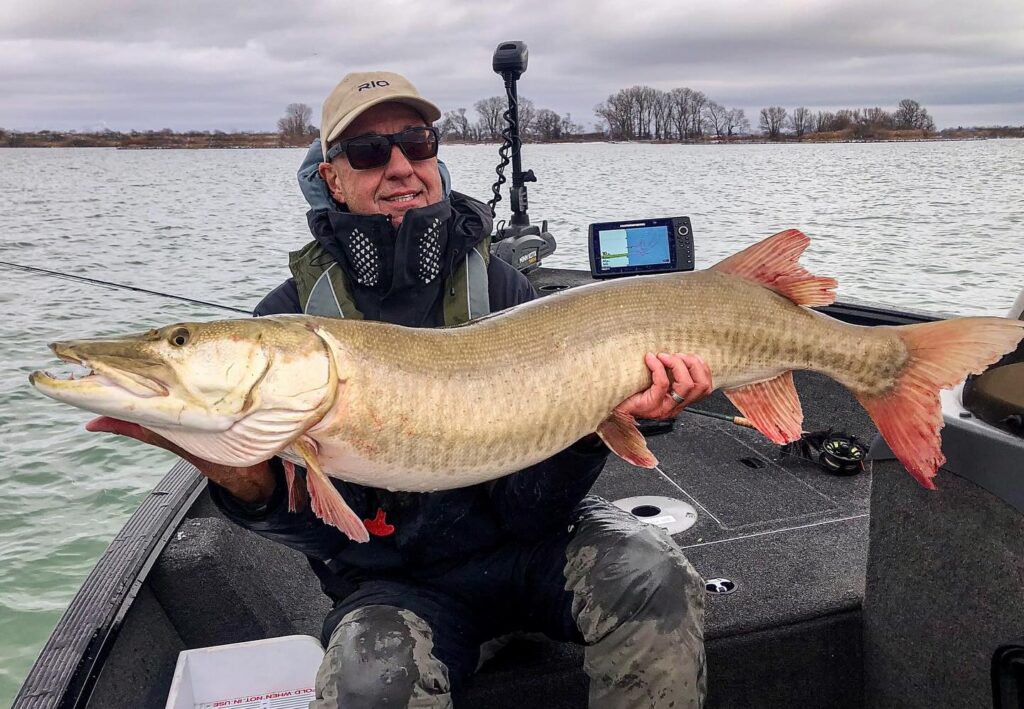
00:02:02 Rick: Oh, boy. Uh, just, uh, I was just looking back at some photos, um, just the other day of what this year has looked like, and definitely wide and varied pursuit. A lot of different species have had a lot of challenges with the weather up and down this year. But, uh, yeah, I’d say overall it was a good year. I spent did a did another trip to Argentina for Sea Run. Brown trout. Had some successful guiding for steelhead, a little bit for muskie. My personal muskie fishing was pretty good again this year. And uh, even though the the weather kind of squelched the end of the season for us, I did end up with a couple really good fish. So always that’s kind of always what you’re looking for when you’re muskie. Yeah. Muskie fishing. It’s big game hunting. So, you know, if you can get one or two big ones during the course of the year, it’s, uh, it definitely, uh, a satisfying feeling. So overall, that’s pretty much been it. And you just really, like I said, chased a variety of species this year from warm water to cold water and yeah, um, a little bit of everything in between.
00:03:03 Dave: That’s cool. So the steelhead program is still going solid because we had it’s been a while, I can’t remember, I guess it’s been at least a couple years when we did our trip with the steelhead school. Right. It was we had a kind of a half a year on your side up there north. And then we were down with Jeff Liskey down there. But you’re still doing steelhead program throughout the year?
00:03:19 Rick: Yes. And it’s basically spring generally when it opens up there and, you know, maybe February, March, April, maybe into early May, uh, and then again, when things kind of start up, it seems like in the last few years it’s been pushing a little later and later each year in the fall. So it’s more mid to late October through when things start to ice up here in December.
00:03:41 Dave: Yep. And that is a the pushing later. Is that just because weather has changed a little bit on you guys. Their flows.
00:03:49 Rick: Yeah. Yeah I think uh September seems a little bit more summer like here than than maybe in the past. And that seems to be pushing in October. So the last few years, our Octobers have been warmer and drier than, you know, years that I remember in the past. So just pushing that run back, um, a little bit more than it has been in the in, in prior years.
00:04:12 Dave: Okay. And have you been out doing any, uh, Atlantic salmon that’s the other species. I think the more I’ve always talked a lot about steelhead, but we’ve slowly been getting more into the Atlantic salmon. And now that we’ve got this trip together, we’re even getting more into it. But are you doing a little bit of that throughout the year or what does that look like?
00:04:28 Rick: It’s been a few years since I’ve been up for Atlantic Salmon, Dave, but I’m really excited about the prospects of this trip that we’re talking about, I really am. I think that’s, uh, an area that I have not been to and really look forward to it. So yeah, hopefully we can, uh, get into a little more discussion of that.
00:04:46 Dave: Yeah. Good. Yeah. We will we’re going to get into that today. And I think the cool thing about that is where we’re heading is Mountain Waters Resort. It’s got this cool history with Lee Wolf, you know. Of course I’m. You know, I’m always loving the history of episodes. We just did a it was pretty interesting. Woolridge boats actually just came out today as we’re speaking, and it was on the history of jet boats. Right. Well, it wasn’t even jet boat history, but it was just the guy back in on the rogue River, essentially was one of the first guys to run the rogue and had this connection to jet boats. And now, you know, jet sleds are all around the country. Everybody uses them. But I love getting the history of it. Right. And and so and there it’s the same thing. You’ve got this guy with Lee Wolf who we all know of. Who was it was the place he went for Atlantic salmon, one of the big places. Do you think about that a little bit as you’re, you know, doing your daily on the history of fly fishing and all that?
00:05:35 Rick: Oh, absolutely. And, you know, really it’s interesting because when I was, you know, just getting into fly fishing would have been very early seventies way before there was videos and internet and really much even in terms of resources. Uh, two of the the anglers that I probably followed the most through their writing was one was Joe Brooks and the other was Lee Wolf. And interestingly, I was able to, you know, when I this, this trip that I just referenced before to Argentina, uh, on the Rio Gallegos River was an area that and it was one of the, the reasons I really wanted to go there. I’ve been there two years in a row, but really one of the reasons I wanted to visit there the first year, uh, was because that was a river that, uh, Joe Brooks had fished, you know, many years ago, probably in the fifties, um, when I can’t even imagine what the travel would have been like to get down there, um, back in those days. Yeah. So, you know, now that with the opportunity to go and fish, you know, where Lee Wolf, you know, was so, um, where he did much of his fishing and, and in research and, and adventures is really an exciting opportunity.
00:06:50 Dave: Nice. Yeah. And hopefully we’ll get a chance at some Atlantic salmon. Always the always the X factor, right? Like like you said, muskie steelhead. These species are. You know, I feel like you chase some of the hardest species to catch out there. Do you ever. Do you ever think. I mean, you must think about that, right? The muskie especially. Is Muskie the hardest one? You know, as far as numbers out there, or are there others? I guess permit would probably be in that range too.
00:07:12 Rick: Yeah. I was going to say for freshwater, I think, you know, Muskie has to be at the top of the list in terms of the most difficult to consistently catch on a fly rod. I mean, you certainly have to go into muskie fishing in general with, uh, your expectations, with realistic expectations, kind of check your ego at the door and just know you know what you’re in for. Um, you know, I think there are some fish in saltwater that, you know, permit, as you mentioned, that that could be more difficult. Um, but from a fresh water standpoint, certainly musky are the top of the list. I just enjoy, I don’t know what it is.
00:07:52 Dave: I enjoy.
00:07:53 Rick: The challenge.
00:07:54 Dave: The challenge. Right.
00:07:55 Rick: I think, you know, realistically, I’ve done this long enough and have gone through different, all the different phases of fly fishing that, um, I just really enjoy pursuing fish that are more difficult just because you, you know, it’s really kind of what it takes for to, for me to kind of still really get that excitement. Um, not that I don’t. I mean, I just enjoy and cherish every, you know, minute that I spend on a river or on a lake. Right. But at the same time to get, you know, kind of get your, uh, blood flowing, your knees knocking, you know, heart pounding. You know, I just like, you know, trying to conquer that challenge of a fish like that.
00:08:34 Dave: Yeah. The cool thing is, with the podcast and all this content we have is that we can send them out to. We mentioned at six fifty four, episode six fifty four, where you actually talked about Muskie and everything. Muskie. So we’ll have that. And then we had a couple actually, I think about once a year in that range. We had an episode with you. So I think before that we talked about, you know, kind of spay. And then before that we talked about steelhead. So we’ve got a good group of lineup for you. And the great thing about this is that I guess we could just announce it here, is that the exciting thing is that you’re going to be coming on on this podcast feed and have a series. Essentially, we’re starting off the series of podcast episodes that you’re going to be hosting. So I’m pretty excited about this. We’ve been talking a little about this. Tell me that a little bit. What are your thoughts there? How did this kind of idea come to you? Describe what you think this podcast could be for people.
00:09:22 Rick: Well, I’m very excited about it, Dave. It’s a great opportunity. What I have in mind and what I was thinking about, even, you know, when we first started talking about this was and I, you know, I think it’s going to focus. Well, I know what it’ll focus on is, you know, we just talked about musky is musky and musky type fish, you know, on top apex predators. And I really have given this a lot of thought, even while I’ve been fishing the last couple of years for muskie and for trophy brown trout and whatnot. You know, top end fish where you don’t maybe have, you know, you’re not catching the numbers, but you’re going again for that, uh, you know, either trophy size fish or you’re going for that, you know, that that personal best or whatever. Um, kind of thinking a lot about what that takes both from a, you know, technique fly, um, you know, mental, emotional, you know, standpoint to be able to, uh, uh, be successful, you know, when you’re fishing for one of these top level fish, top tier fish and, um, just really kind of digging deep into, you know, some of the nuances, some of the, you know, strategies, approaches that maybe aren’t covered, uh, you know, in, you know, the other podcasts, I guess.
00:10:40 Dave: Yep. Are there some other podcasts I know? Um, there’s some older ones, but are there any current podcasts out there that are focused on the same similar topic?
00:10:49 Rick: I think there are a few. I know that, um, you know Dan at Musky Fool. Oh, yeah. They do something. Um, you know, they do a podcast, um, might be called a figure eight podcast, possibly, um, where they’re the other diving into, you know, some musky topics. Um, you know, hopefully that I, you know, can bring something a little different to the table with this, uh, in terms of, like I said, really looking into, you know, more in-depth strategy and, you know, that type of an approach.
00:11:19 Dave: Yep. Exactly. No, I think you do bring something. The cool thing about the podcasting space, you know, is that it’s great because, you know, it’s just you sharing your knowledge. You know, it can be educational and entertaining and all that stuff. And the fact that you’ve written books kind of sets you at a different level. And great books. I mean, I think What was the first book you wrote? Uh, we’ve talked about this on other podcasts, but remind us again, what was the first book you wrote in the fly fishing space?
00:11:45 Rick: Oh, boy. It goes back to like the early nineties. Um, and it was just called fly fishing, the Great Lakes tributaries and, um, you know, at the time, it’s just a very rough book of a self published. When I look back at it, it’s like, you know, but at the same time, there was nothing out there. And, you know, as a self published book, boy, it did very well. I mean, when I look back at the numbers of what we sold back in those days and again, there was very little competition.
00:12:12 Dave: So, so good.
00:12:13 Rick: Yeah. But I do think, you know, that that brings up, uh, you know, a good subject is so hunting musky with the fly was released, I believe, in twenty seventeen. And while a lot of the information in there is still very relevant, and, you know, I regularly still get comments from readers who, You know, just picked up the book recently and, you know, feel like it’s really helped them get, you know, thumbs up, you know, from everybody that um, pretty much that’s read the book. You know, it’s still and like I said, information is very relevant, but it’s still eight, eight years removed now. And, you know, I have to say that I’ve noticed a lot of things that I have done, particularly in the last five or six years, um, with muskie fishing that, you know, that little things, this little, small little things that I’ve added changed, you know, that I think we can really expand upon in the podcast that, uh, you know, would go well with the book, but expand on some of that information. So I really feel like that’s, um, going going to be an important part of the objective of all this.
00:13:24 Dave: Yeah, I agree, I think that’s what’s great. It’s almost like a, a companion document or a, you know, instead of rereleasing the book and updating it, which you could do to this is a way to keep people informed and it goes both ways. So people can maybe have never heard of your book, are going to listen to the podcast and be like, oh wow, this is great. Where can I learn more? And then we’ll direct it. You can direct them to the book, you know, and then people the other way that don’t know about the podcast might find you eventually and hear more and learn the newer techniques on it. Right. It’s pretty awesome.
00:13:52 Rick: Exactly. Yeah. No, I hope they that they work in tandem like that. And and the idea is, yes, getting my input on things that I’ve done and changed over the, you know, last five, six, ten years, but also experts that are fishing in different parts of the country, um, you know, for different species or for muskie. Uh, you know, the one thing is, is that, you know, I’m always amazed at the type, the different environments that muskies live in, you know, whether it be small rivers, big rivers, lakes, you know, different climates, you know, from the, the, the brutal cold of the north down, you know, further south. And these all impact how muskies, you know, react to certain strategies, certain techniques and flies. So I hope to kind of mix some of that in getting some local flavor as well.
00:14:44 Dave: Right. That’s right. And you probably covered, I can’t remember on your book on the Muskie book, but yeah, the life history, the, the, um, you know, where they’re located, right? Throughout the country. And like you’re saying, whether it’s south or north, you’re going to be fishing them probably quite a bit different, right. Is that the case?
00:15:00 Rick: You can you know, it definitely. Or or big rivers or small rivers and lakes and things like that. You know, definitely lakes first. First rivers. There are nuances that, uh, you know, hopefully we can dig into a little deeper and, uh, you know, stuff that’ll be, you know, maybe more relevant to, you know, some listeners than others. But at the same time, you know, I really hope to, uh, kind of uncover some of that. Yeah. Again, just digging a little deeper than than you can in a book, getting a little more specific and and again and across other species to I. You hope to take this to, you know, streamer fishing for brown trout and pike and, you know, maybe even get into salt water a little bit. You know, I’d like to do a, do a, an episode on, um, you know, like barracuda and. Oh, right. Saltwater predators like that. Um.
00:15:49 Dave: If you’re looking for a world class fly fishing experience, it’s time to check out Mountain Waters Resort, nestled along Newfoundland’s legendary Portland Creek, this spot has a history that runs as deep as the Atlantic salmon that call it home. Once a fly fishing retreat for the great Lee Wolf, today it’s your turn to step into these historic waters and swing up your salmon. This year, you can head over to Wet Fly. Waters right now and make it happen. That’s what fly. Waters. Let’s get out there today. This episode is brought to you by AVC Rig Adventure Vehicle Concepts out of Colorado. These guys build next level adventure vans designed to help you explore farther and stay out longer. Are you dreaming of a full van build? Or maybe you just need the best aluminum cabinets and storage for your DIY rig? AVC rig makes it easy to turn your vehicle into the ultimate mobile base camp. You can check them out right now at AVC. That’s a rig. Yeah, I think it opens up. And and that’s again, the cool thing about the podcast is that it is open. You don’t have to necessarily be set on one thing. You know, the entire podcast or series. It can be flexible to take a tangent, which we always love. So so this is good. So we primed everybody for this exciting, you know, news, which is the new podcast and series that’s coming out here. Um, and we will be announcing that as we get closer to launching it. Um, but the other great thing is we actually have another master class that we’ve been talking about as well. So we’re doing and you’ve done a few of these, or maybe a couple of these where we’ve chatted about a certain topic, more of you presenting and we’re going to have that here come up too. And I think this is going to be focused more maybe. Let’s talk about that. I mentioned that to you doing something around two handed, you know, Spey fishing, you know, what were your thoughts there on that masterclass that you were thinking about.
00:17:41 Rick: Yeah, I have and I have a presentation pulled together on that day that just goes through, you know, the the as well as you can, you know, the whole progression of Sp-a and Sp-d casting and a bit on, you know, sp-a fishing. You know, I kind of look at the casting as being a, you know, a, a conduit for presenting the fly, you know, the two in as much as a lot of times we focus on casting and, you know, if you’re new to it, you have to just focus on the cast. But I like to think of it in terms of, you know, taking it to the river to in terms of how is this cast going to help you as an angler or help urine, either as a, as a becoming a more efficient angler or help you to enjoy the angling, you know, experience. Um, so I think that’s, you know what this is what that all focused on, you know, and obviously in a forty five minute to an hour presentation.
00:18:35 Dave: Yeah, there’s only so much everything.
00:18:37 Rick: Anybody, you know, everything someone needs to know about Spey casting. But we’ll at least try to, uh, give the basics. And at the same time, hopefully, uh, give people hungry to hungrier to, to learn more going forward.
00:18:52 Dave: Yeah. I think that’s what’s exciting is that. Yeah, you can’t cover it all. There’s so much it’s a lifelong journey. And whether it’s Spey or single handed cast. But, um, I think it’s it’s pretty cool because, you know, myself and lots of listeners have struggles with, you know, whether they’re just getting into it or don’t know where to start. What do you think for the Spey? Let’s just keep it on two handed casting with the Spey sort of set up, what would be, you know, if you had maybe this is in your presentations, but for things to prime people for maybe give them a tip. You know, if let’s say over the next month you are going to every week, send out a email to somebody and say, okay, here’s one thing you should be thinking about. And here’s a maybe a, I don’t know, an exercise or something. Can you break it down to that? Like, are there four high level things that can be broken out? Or could you summarize? You know what I mean? I’m not sure if your presentation gets that detailed.
00:19:41 Rick: Yeah, I think a first a really an important thing to understand with Spey casting is understanding the anchor point. And you know what that means and where that is positioned. Um, so, you know, generally we won’t get into too much depth here, but just generally something that’s, you know, forty five degree angle off to the, uh, you know, your casting shoulder side, you know, usually about a rod length away and just understanding how you know where that needs to be set up for a successful cast. Because I think if you can focus on, uh, you know, a good, solid anchor point and understand how you set up that anchor point, that’s really a key to making a good cast. Um, so that would be, you know, kind of number one, you know, to me, you know, I think hand positioning and, you know, somewhat going to be, you know, a bit of a, you know, and, and I’ll even say if we’re going to break it into four, I mean, I’d say hand and foot positioning kind of put that into one. Um, you know, so you’re kind of how you position your body, um, for the cast and some of that is, you know, that I have preferences for how I’d like to, you know, have the hands set up. But, you know, some of it’s personal preference as well. I think a third thing is tempo of your cast. You know, I think most beginning casters are just too fast with their movements. You know, I think slower is better in this situation. A lot of times it you know, when when I’m even instructing anglers, they’re amazed at how slow you can actually make the cast kind of keep everything moving. Still, there’s just that, you know, in most casters, just that feeling that it has to kind of got to keep it moving or, you know, something? You know things are going to die out. And, uh, you know, it’s more the applied motion, you know, at the right time more than anything else. And then I’d say the, the, the last, you know, if we’re going to put it into four tips is, um, using a lot of bottom hand.
00:21:34 Dave: Or bottom hand. Right.
00:21:36 Rick: If you’re new to two hand casting and coming from a one hand casting background, certainly, you know, you’re going to you want to rely on that, you’re going to want to push that. And that’s what I see with a lot of, uh, beginning anglers and just, you know, getting used to that, pulling as much as you’re pushing or even pulling more than you’re pushing with the bottom hand.
00:21:56 Dave: Yeah, those are great. You know, again, there’s a lot more to it. But I love being able to focus it. So break it down into four things. You got the anchor point anchor placement, hand position, foot position tempo and using the bottom hand right. So those are and probably somebody could even now be thinking about okay those are keys. How do I start to focus on practicing those. You know. And I guess what is the best thing. Like you know, you guys where you’re at, it’s probably a little colder there and maybe you can’t get outside every day. But I mean, actually, for the most part, there are times, I mean, somebody could practice these things, right? Is there a way you could practice this, even if it’s frozen outside and you can’t get on the water?
00:22:32 Rick: Well, that makes it more difficult. Certainly. There, you know, it’s you can create leaders that creates, you know, that create, uh, some friction when you’re casting, you know, away from water. But generally they don’t work that well. I mean, there’s in my estimation, anyways, there’s no substitute for water, but it doesn’t have to necessarily be moving water. You can practice on a pond. You know, I think one of the most, especially if you’re just beginning just really focusing on just the forward spey motion or, you know, the switch cast where you’re just you’re not changing directions, but just making that forward cast and getting used to using the bottom hand, um, is really a good start. Every cast that you make of all the different casts. Every cast ends with that forward spey motion. So just practicing that and getting that into, you know, into your, um, muscle memory is really just a key. So, but, you know, and then you can just, you can change directions on the pond by just changing the, basically the direction of the cast. So you can make ninety degree angle changes even on Stillwater, um, if you wanted to practice there. So yeah, practice is very important once you learn, you know, the basics. I mean, obviously you don’t want to practice bad habits. That does no good at all. But, you know, once you have the basics of the cast down practice, I mean, myself, I practice in between when I’m not on the water for, you know, for extended periods. I’m always amazed at how my timing kind of gets out of whack just when I am away from it for a few weeks or a month. So it’s really important, especially if you haven’t cast in a while and you’re going on a trip, you know, just get out there and, you know, get tuned up.
00:24:15 Dave: Get tuned up. Exactly. Yeah. And the the trip that when we’re looking at doing this uh, not next year but the following year to the Mountain waters Resort, I think, you know, we’re definitely going to be getting tuned up before that because that’ll be in, I think, June. Uh, that right in the Prime Times early part of the season and, uh, yeah. So I mean, you could go out there in the spring time and just, you know, cast. What do you think is a good getting tuned up? Do you think getting out there daily once a week for ten minutes an hour. What do you think is a good tuning up? You know, cadence?
00:24:44 Rick: I think it really depends on your access to water and your availability of time. I do tend to feel, at least for myself, that when I can practice a little bit longer than just going out for ten minutes, I feel like I can make better progress in what I’m trying to attain. So, you know, usually, you know, forty five minutes an hour. Practice sessions seem to work pretty well for me. Um, you know, if I go much longer than that, I start to feel some fatigue. If you’re just casting the entire time. But a lot of times it really it just takes five, ten minutes to even just to get my rhythm down that I want. So I do feel like, you know, something in that forty five minute to an hour time frame is what I usually shoot for when I’m. So, you know, you do that a couple, three times a week if you can. You’re definitely going to, uh, make some progress.
00:25:34 Dave: I always think about my first time when I learned Spey, you know, just kind of taught myself it was. That’s pretty much. I went out there every day, and I kind of did the same thing. Spent an hour out there and just did it every day and every day. And, you know, it wasn’t perfect, but it got me in a better position to be ready to, you know, when you’re on the water. Right? And then you have a wall behind you and you got all the conditions and, and water currents, you’re just more prepared, right, for those situations, which is great. Um. So cool. Well, this is, you know, I think a big part, like you said, getting ready for these trips, the the trip we mentioned Atlantic salmon. I think the cool thing on this is that at Mountain Waters Resort, they have they do a single handed game. You know, it’s kind of kind of more old school traditional. They’ve always done it. I feel like there’s some smaller streams out in Newfoundland that are definitely perfect for the single hand rod. The thing is, Portland Creek, which will be spent a lot of time on, is a big water. And the Spey is really, I think, going to be a good tool to have out there, but there’s not as many people doing it. What are your thoughts there on that? Do you feel like that would be, you know, if we were up there with you, we had some other, um, you know, guests along the trip. Do you think that would be a pretty good chance to, you know, get better at the craft of Spey and two handed casting on the water?
00:26:43 Rick: Absolutely, Dave. I’m really excited about that part of it and that challenge. Um, you know, I have listened to I think it’s you might have two podcasts. Yeah. We do we from the, uh, you know, the people from the Lodge.
00:26:56 Dave: Yeah. We had, uh, basically, uh, Les Wentzel, who is, uh, well, Ryan is the son who’s running the place, and then les is the dad. And then we also had another one with one of the guides, and they’re both old time guys that just have tons of knowledge. And yeah, they’re out there.
00:27:11 Rick: And the knowledge came really through in the podcast. I mean, they they painted a great picture of what the fishery is like, what to expect. Um, certainly exciting from the standpoint that most of the fish they catch are on the surface or just, you know, near the surface. I mean, really, uh, exciting. And it does seem like, you know, the numbers there have held up really well, um, in terms of their run numbers. But they do seem to focus a lot on the single hand. You know, the one thing that and, you know, I’m not a hundred percent sure about this, but you know, what I kind of took from those podcasts were that they have had people up there that have spey fish. Yeah. But I got a feeling that they were using bigger rods. And it does sound like because I know they really stressed the importance of the stealth and, you know, not, you know, stirring up the water too much, especially when they were, you know, if you’re doing a big sweep, if you’re doing a double or a, you know, a snap tee. So I’m just really feel like going up there with maybe just some shorter rides, some shorter heads that you can use efficiently and stealthily, um, so that, you know, you’re just single spey, not really causing much disturbance during the cast. I really think that, um, that could play very well up there.
00:28:39 Dave: That’s awesome. And that’s something I wasn’t even thinking of. That’s a great reminder. Is that, yeah, they did talk about that. Like, you can’t just be splashing. The fish can get spooked. So you got to be a little stealthy. And yeah, there’s a lot of different tools we’ve been talking about that we’ve had um, you know, obviously we’re always chatting on that. We had guideline on recently and nom on they both talked. They both more Scandinavia right. Scandinavian style. And they talked about some of the differences. And it’s really interesting because I think it’s as Sp-a evolves and you’ve been in the middle of it, right? You’ve got these short heads and longer heads and all this stuff. But what is the for you right now? Your, you know, your go to for when you think of steelhead, is it just getting shorter and shorter and everything or what’s your sweet spot right now if we go back to steelhead?
00:29:23 Rick: Yeah, I think sometimes, you know, some of the heads almost get too short, you know, so that and I even see it with some of the anglers. I mean, they, they get so short that, uh, you know, they’re popping their anchor point pretty regularly. So I, you know, that’s the one thing. So I even from Skagit Heads, I kind of like more in the twenty two to twenty four foot length, you know, for, for me, um, even if you’re using a, you know, twelve or twelve and a half foot rod, I just like having a little bit more, uh, length there. So I’m not blowing the anchor. And I’m usually using here in the Great Lakes, usually using ten foot tips. So one line that I’ve been using, you know, quite a bit. And, you know, there’s more, more and more lines on the market now that are a little bit more hybrid, you know, so they’re kind of a cross between a Scandi and a, you know, an a Skagit head and you know, one that that Rio makes, I’ve been using it’s uh, they’re uh Scandi short versa tip. Oh, and you can change the tips, but you know, there’s others on the, on the market similar to that. Um, so it’s kind of a bit of an all around go to if I want to fish up higher in the water column, you know, you can just use a floating or an intermediate tip. And if you need to get down, you know, you can even throw you can, you know, put a, you know, type six tip on there. You can even run T8 or T11 off of it. So you know, I think those types of lines, you know, those make a lot of sense. But uh, you know, our rivers are here anyways. Are, are, you know, generally smaller, you know, more intimate. So there’s not a need for a lot of long line. Um, you know, there are some in the Great Lakes like that, you know, in Michigan and Ontario. But for the most part, what we have in New York, we don’t need the real long heads.
00:31:08 Dave: Yeah. The real. And so it’s that. Yeah, that middle ground somewhere in there. It’s kind of a hybrid. And and that’s what I think the guys in those recent episodes with guideline and you know, Norm were both talking about is that, yeah, it’s not necessarily just Skagit or Scandi anymore. You know, there’s a lot of middle ground and there’s a lot of overlap. And like you said, the Scandi short from Rio sounds like one of those. And so that line there, would that be something we could, you know, bring up to fish? Like, what would you be bringing up for this? From what you know, for Atlantic salmon up to Mountain Waters Resort will be the setup you’d have there.
00:31:37 Rick: I think. You know, we’re obviously going to need to do a little more research, but I think just more of a traditional Scandi, uh, head is going to be better up there. Um, you know, and as much as I like that Scandi short, you know, like I said, it’s a little more hybrid. So it does have a little bit more of an aggressive forward taper. Um, I think a Scandi that has In more of that. You know, traditional longer front taper would probably be a little stealthier. And, um, you know, present that fly just a little softer on the surface. So I do think and really, one of the things that I think excites me about this trip is, you know, I mentioned that earlier, just with the casting. Is that one of the things that really excite me about, you know, the Spey casting and Spey fishing is just trying to integrate, you know, these casts into a, you know, a strategy or an approach that is effective. And, um, you know, I think this is really a, you know, a good opportunity for that. But like I said, I just think there will be some opportunity to kind of be more tactical and opportunistic with the approach here. But I do think more of a traditional Scandi would be the the way to go.
00:32:49 Dave: Awesome. Yeah, it’s going to be exciting. I think for me, you know, just having you there again, it’s like the steelhead school, you know, we did the steelhead school, you know, you were there, I was there, I kind of was hanging around. I remember we had that one day at the steelhead School. I think it was. Was it? I remember that day my feet froze off and I can’t remember who was there. And we actually I remember I had to pull out. I talked about this story a few times and whoever was there on that day, I can’t remember the other client. I think he had a much better day than I had. Right. But where was that tree? Was that what was that creek we were on there, or is that one a secret spot?
00:33:20 Rick: No. Well, the second day, I think where we, we, uh, I think that was the last day of the, the school. Right. Yeah. That was. Yeah, that was on the Cattaraugus.
00:33:29 Dave: Oh, that was Cattaraugus.
00:33:29 Rick: Okay. Yeah. Yeah. And it was just barely fishable that day. The group wanted to. That was the third day. They wanted to see it and fish it. So everybody made the decision we were going to go there, even though it was marginal and it was cold.
00:33:42 Dave: It was cold, wasn’t it? Like, I’m not I’m not lying. I’m not just a wimp. Right. This was it was cold water.
00:33:47 Rick: Yeah. It was cold water. Cold feet for sure.
00:33:49 Dave: Yeah. How do you do that? What’s your cold weather tip when it’s out there? It’s freezing. How do you keep your feet from freezing off?
00:33:55 Rick: Uh, well, um, battery operated socks. Oh, for sure. Um, boot foot waders or another, uh, you know, definitely keep your feet warmer.
00:34:04 Dave: Oh. So. Yeah. So don’t go with the stocking.
00:34:06 Rick: Stocking foot.
00:34:07 Dave: Yeah, and I’ve heard that before. I’ve heard some guides recently talk about that. The fact that they’re going to on their drift boats, they’re just going straight up, um, bibs and like, just, you know, regular boots, you know, waterproof boot. Because what it does is, you know, what the stocking foot does when it’s really cold is it freezes and you have this layer in between that gets really cold. And I think that’s part of the problem. Right. But boot foot are actually part of it. You just slip in and you’re in a nice boot basically.
00:34:31 Rick: Right. Yeah. Yeah. And it’s a little bit drier. And I, you know, kind of keeps a little bit more movement for your toes and everything. So I think all those things combined, you know a lot of the boot boots do also have some insulation in the boot. So you have as many side, you know, you still have the same amount of socks on. You can still use battery operated socks. Um, but at the same time you got that. Definitely. You know, much, much more insulation and valve.
00:34:57 Dave: So that’s it. That’s a huge tip. I mean, anybody listening now that hasn’t used. And the problem with Buford Rises another piece of gear. You know none of that’s inexpensive right. So you got to get a piece. But if you really want the thing you know, I mean what is the disadvantage. Again we’re taking a nice little tangent here. But what is the disadvantage of the boot foot waiter.
00:35:14 Rick: For me it’s just you know, I think ankle support and whatnot. You know, I think you just get a little better, you know, a little better support when you have your boots laced up tight and, you know, you can kind of adjust that during the course of the day. A lot of times when you put your boots on, they’re, you know, little dry, they’re tight, and then when everything gets wet, you gotta tighten them again. But I think you just get a for so for, you know, situations where you know, you’re hiking or especially on, you know, rocky trails or you’re up and down, you know, I think that extra ankle support can be important. But so I think that’s the advantage there, you know, but, uh, you know, the boot foots are generally going to be a little heavier. side. I think in terms of them as being a good. Yeah, like I said, it’s, you know, becomes like fly rods where you need, you know, multiple pairs of waders and boots, but, you know, generally are not cheap, but at the same time, you know, it does, you know, provide you that, that option. So if you’re not hiking a lot, but you know, you’re going to be standing in cold water for most of the day, um, that’s definitely the, you know, the way to go.
00:36:18 Speaker 3: Experience the waters of Bristol Bay at Togiak River Lodge, where fly fishing meets Alaska’s rugged beauty. This is the place to complete the Alaska Grand Slam with all five salmon species, rainbow trout, Arctic char and more. Where each day offers a new Alaskan adventure. You can visit Togiak Lodge. Com right now to start planning your Bristol Bay experience with Togiak River Lodge.
00:36:43 Dave: Well, that’s we’re talking environment, right? Which is a big part of fishing. You know, you got the fish but also, you know, the cold. And another thing, you know, back to mountain waters is, you know, I don’t think cold is going to be a big issue because we’re going to be there in June. So the weather, you know, likely will be pretty decent. But the wind is one thing that we’re going to probably have some of their what’s your when you think about wind, you know, that’s a whole nother thing. How do you feel like the two handed rod is a better tool for the wind? Do you think it does well in the wind?
00:37:10 Rick: Oh I do, yes. But the key there will be, Dave, that you need to be able to cast off of both shoulders, you know, so that, um, if you do, you know, have a depending on, you know, the direction of the wind, obviously, um, you know, an upriver wind tends to be a little more problematic with your presentation. So I think the wind for me, impacts the presentation more than it actually does. The casting. You know, I feel like if your position, as long as you’re not casting directly into the wind, um, as long as it’s kind of angled a bit in one direction or another, you can deal with that. Uh, with the two hander, I think. Yeah. Easier than with the single handed rod. Um, there’s actually even days where I’ll go out on local rivers, um, with the two hander. Well, I always fish with the two hander on the, you know, local steelhead rivers. But where I know there’s less anglers that going to be out because they just can’t deal with the wind as easily. You know, to me, the only disadvantage, the bigger disadvantage of the wind is just water coverage. And, um, you know, my best example or experience with that has been down in Argentina the last couple of years.
00:38:20 Dave: Right. The wind is down there. You guys get some good wind there too. Right.
00:38:23 Rick: Yeah. And you get some winds that we’ve had a couple of days where the winds and I got videoed uh, to back this up, but where we’ve had winds that have been sixty mile an hour winds, you know, or at least gusts. And as long as you’re not casting into and the guides are very good down there, that they won’t fish pools where you’re casting directly into it. Um, usually it’s, you know, a, a, a down river wind and you can, you know, kind of deal with it pretty easily. But what I find is just the casting angle changes. You know, when you get those gusts. I mean, you’re making a cast. Let’s say you want to angle it, you know, seventy degrees or something like that. Uh, and a lot of times those gusts will come up and push your line down further than you wanted it to be, or you kind of plan on the wind. And it’s not, you know, the gusts, you know, lighten up just a little bit. So now you’re angling a little higher than you want it to be. So sometimes I just feel like I don’t cover the water quite as well because you’re just not getting that. You’re just not gridding things out as much as, you know, I would like, but, uh, but it does sound like at mountain waters that you are making multiple casts from one right position. That’s true. So, you know, that would probably give you, you know, might even be an advantage, you know, if you’re making different casts from different angles. Um, so I don’t think it’ll be quite as, uh, you know, much of a problem.
00:39:44 Dave: Yeah. That’s right. Yeah. And I think the wind too is I think I might you know, the wind is not necessarily a bad thing. I think having a little chop on the water might not be the end of the. You know, I think you can still catch fish with a little bit of wind right out there. Do you think that’s the case? I think yeah.
00:39:58 Rick: I believe so too. You know, I think a lot of times that, you know, that Stillwater can be, uh, you know, more problematic from a, from getting fish, you know, interested in your fly. And, and I know that’s certainly the case, uh, in Argentina, that you get a little bit of wind chop things up a little bit. They’re not fish aren’t as spooky. Um, you know, also, you know, they’re it stirs the water up a little bit too, so adds a little color to the water. But, uh, yeah, I think, you know, wind, as long as you can tolerate it generally has some advantages.
00:40:30 Dave: Yeah. That’s right. Yeah. Just the tolerating is the biggest thing. Yeah. If it gets to a point like today, I think you were saying before we got on air, it’s seventy five miles an hour out or they’re predicting where you’re at. And are you in New York now currently.
00:40:41 Rick: Yes. Yeah. So I’m in kind of Buffalo, New York area. So just, uh, right along Lake Erie, uh, quite a windstorm today. We’re just hoping we’re hoping we don’t lose power.
00:40:51 Dave: Yeah. And seventy five. I mean, that is some rage. I mean, I don’t think, you know, at some point, I’m not even sure what the mile per hour is, but I feel like, you know, somewhere in the. I don’t know, is it? What do you think it is where it gets too much to fish. Do you have that number in your head?
00:41:03 Rick: Yeah, I think seventy five would be probably be at, you know, sixty. I know like I said, we you know, they were estimated at sixty in Argentina.
00:41:12 Dave: Oh they were. Oh wow. So you guys were hitting sixty. You’re still fishing at sixty.
00:41:15 Rick: Those are sixty mile an hour gusts. And we were able to kind of fish through that one day or a couple of times actually. You know, one thing that I always think about when it when you get wind like this too, especially if you’re in forested areas, I’m just more concerned about, uh, you know, branches and things like that coming down on you. I was actually on New York Salmon River last week, and a big front came through on Friday. I knew it was going to come through, but it, uh, just kind of came through all at once. And, God, I swear, the winds were probably sixty miles an hour then, too. And I was kind of fishing along an edge of the river, and there was a just a couple of really loud crashes nearby where branches or trees got blown over. And it definitely was a little unnerving. So, yeah, when the winds get up to that, uh, that level, it is, uh, you have to take, you know, some precautions, I think.
00:42:04 Dave: Yep. Definitely. And that trip to Argentina sounds amazing. Was that for. That was the sea run. Brown trout fishing?
00:42:10 Rick: Yes.
00:42:11 Dave: Yeah. It was. And were you guys. I’m not sure where you’re at exactly, but maybe talk about that for a sec here. What was the. Was that a pretty good trip? Do you guys have a lot of action? Was it all two handed spey casting or what were you guys doing?
00:42:22 Rick: Yeah, it’s all two handed fishing. Um, yeah. I would say on a daily basis you’re probably hooking three fish. You know, it was a typical day. I mean, some days more, some days less. But I think that would be pretty typical. Um, the fish just really ranged in size anywhere from, you know, a few pounds up to I think probably the biggest we got, you know, in the two weeks was nineteen pounds.
00:42:46 Dave: Nineteen.
00:42:47 Rick: Yeah. Yeah. Um, you know, I got one that was just about eighteen the first year. Uh, so, I mean, you know, that possibility exists. You know, it’s I what I really like about it is it’s just a very tactical fishery, uh, where, you know, it’s not just all just cast and swing and. Hang on, you’re thinking about every cast, you know, thinking about the angles. You’re not. Sometimes you’re covering long pools, other times you’re covering just little spots, little drop offs, things like that. So you gotta change the angle. Uh, so that’s pretty neat. And when the water is low and clear, you’re using little, small, little flies even, you know, they’re tied like nymphs and, um, usually adding a little action, just stripping the fly slowly. So it’s, it’s all a little bit different, you know. And, you know, I like that part of it. And, uh, you know, you really had to think about water coverage too, because as you’re stripping the fly, you kind of, um, you know, potentially changing how your, uh, you know, your gridding out the water. So, you know, it’s really important to kind of stay focused as you’re fishing through different spots and understanding what you’re trying to do in each spot. Because like I said, there might be weed lines, drop offs. So it isn’t just, you know, pounding out your longest gas and hanging on, you know, every cast you got to think about and and try to do something specific with it. So I really enjoy that part of it.
00:44:07 Dave: Yeah. And we’ll hear more about that. The great thing like we mentioned the your new podcast, you know, you’ll be talking more about that. Right. Because those are those species. You’re not just going to cover Muskie. You’ll have some of the other bigger I mean essentially yeah they’re predators right? I mean, all all these fish to a certain extent are predators. Even, uh, you know, I mean, you name the fish, right? They’re eating they’re eating bugs. But I mean, you’re talking probably more like eating other fish and stuff like that. Right.
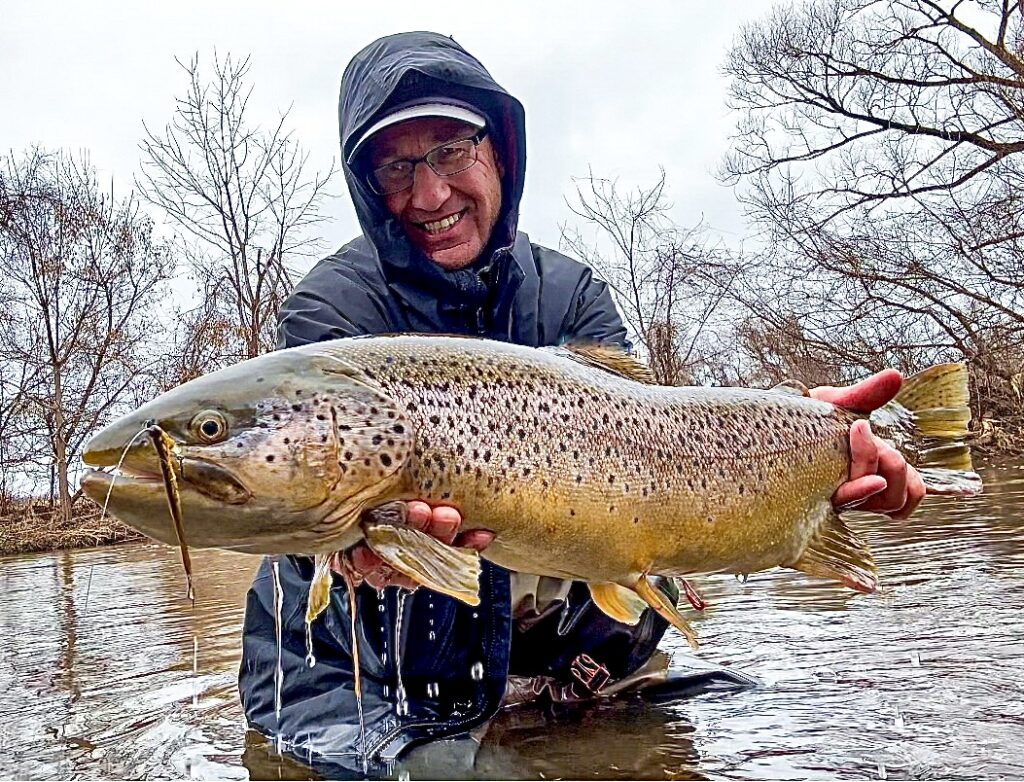
00:44:29 Rick: Exactly. Yeah. So, you know, definitely we’ll be looking at brown trout, particularly, uh, trophy sized brown trout in streams and lakes and things like that. I mean, I think I see a lot of similarities between mature brown trout and mature muskies in terms of, you know, how they hunt and how they position themselves. So, yeah, and then we’ll kind of take it from there, you know, kind of move into other species that have similar characteristics.
00:44:56 Dave: Yeah. Because I think Muskie too, I feel like that’s a growing again, I’m always a little biased in the podcast here because I feel like I get an opportunity to talk to all these great anglers and I’m, you know, and maybe I’m hearing more that the general public isn’t hearing as much. But do you feel like that’s growing quite a bit? The muskie do you see growth there or. Yeah. I mean, what percentage are muskie anglers out there or soon to be muskie anglers?
00:45:18 Rick: Oh boy. I’ll tell you, it’s still a small, you know, segment of fly fishers.
00:45:23 Dave: Smaller than you think. It’s smaller than steelhead.
00:45:25 Rick: I don’t think it’s more than steelhead. If you take Great Lakes and West Coast steelhead, I don’t think it is, but it is just a very growing, you know, subset of fly anglers for sure. And, you know, I think that the one thing that I see is once somebody kind of catches the musky bug, you know, they kind of go all in.
00:45:47 Dave: Oh they do.
00:45:49 Rick: Yeah. So you know, and maybe it’s, you know, all in I mean, you know, it’s not like the only thing they fish for, but you know, you can tell because, you know, I talked to a lot of anglers, you know, whether it’s direct or, you know, through messages and email and you can kind of tell once they just have got that desire to, you know, to catch their first musky or to catch multiple muskies, you know, they really kind of start taking it to the next level.
00:46:16 Dave: Yeah. Is it similar to the I’ve heard, you know, the stripers out of on the East Coast that there’s this cult thing going on right where people are camping out of their car? Is it kind of like that with musky? You get the extreme?
00:46:26 Rick: Oh, there’s no question. It’s a it is a cult. You know, the, the, the that serious musky anglers. You know our our kind of a similar cloth. There’s no question about it. And, uh, yeah, you kind of start doing things that, you know, normal people wouldn’t do as I think is where I would where I would put it.
00:46:44 Dave: Yeah. It’s so funny. I mean, you could take a lot of that’s a great thing about fly fishing is that no matter what species you’re into right now, you’re you’ve all got that passion. I think everybody kind of has that, you know, it’s I don’t know what it is about it, but it just it kind of takes it consumes you. Right? And you just go down that deep rabbit hole of whatever it is it does.
00:47:03 Rick: Yeah. There’s no question about it. And you know, Muskie definitely has that attraction, has that appeal. No question about it.
00:47:10 Dave: Nice. Well, we mentioned it at the top. There’s some great things coming. Obviously the podcast we have, the masterclass I’m excited about too, because that’s an opportunity for you to actually present. And we can just and for me it’s great because I can sit there and follow. So we’ll have that masterclass coming up here that people, everybody listening can check out as well. Um, we’re going to have a great group there on that. So that’ll be exciting. Let’s take it out of here. Rick, we got a new segment we’re doing. This is our Wet fly Swing trivia segment. And this has been a lot of fun because we’re able to kind of engage folks a little bit more here. So we’re going to get a few more tips before we get out of here. But let’s jump into this really quick. This is how this works. I’m going to ask them a question about you, some of your history and fly fishing. Whoever has the right answer, what you have to do is go over to the post that goes out today on Instagram for this episode, and just in the comments, just post your answer. Just write wet fly swing trivia answer to this question and whoever gets it right, I’m going to choose one winner and they’re going to win a book from Rick here, one of Rick’s great books. So we’re going to be giving that away today. And you just have to tag, um, tag wet fly swing tag at Rick and tag trout routes as well because there are presenting sponsor for this episode. So trout routes a big shout out to them. They’re doing great stuff out there. So tag those three brands here. And then your answer to this question, which is obviously Rick has a bunch of great books. We’ve talked about that. You also had another business in fly fishing where you owned a fly shop for about ten years. So if you know the answer to the name of that fly shop, that’s going to be today’s question. So put the answer in our trivia like I mentioned. And the first person I see that gets it right, it doesn’t have to be necessarily. It might not be the first person. This is going to be a little random. It’s the first person I see when I go over there and click over right now on social media. So that’s the wet fly swing trivia. Today. I feel like that one is going to be easily answerable today. So so good. All right. So we got that one going Rick. Um, so let’s just take it out of here again. We mentioned a couple of different species and topics. Let’s take it back to the Spey again. You gave us a few tips. So let’s take it to the water. We’re on the water. We’ve got our gear. You know back to that. What’s a tip or two. Have you already mentioned or what do you think is the biggest thing we could be working on, you know, to get a better chance to you mentioned positioning. I think that’s a big challenge for people. How do you the angle is that a very important part of swinging.
00:49:26 Rick: So do we want to look at the actual taking it to the water? Dave. And in terms of presentation.
00:49:32 Dave: Yeah, let’s take that. Let’s take that. Because you mentioned that I really think the angle you talked about Argentina, but let’s take it back to steelhead or Atlantic salmon. You’re because you have this forty five ninety I know with Atlantic salmon they say sometimes you could cast ninety and they’re going to hit it as soon as it drops. What do you think about with angle? How do you know what angle to put it at and all that?
00:49:50 Rick: I think the biggest thing with, you know, spey fishing, swinging a fly is really understanding what your fly is doing. You know, you have the ability as the angler right from the cast, right to, you know, manipulation of the line to control the depth, control the speed, um, you know, control, you know, how you quickly you cover the water. And I think, you know, it’s important to not just go out there as a robot, but to think about Every cast was. First of all, think about the fish. You’re you’re you know, that you’re pursuing, do some research or at least understand how you know, what is the most likely best presentation for that fish. You know, given the conditions, you know, water temperature, water clarity, all that type of stuff and really trying to understand what you’re trying to do with the fly and then do what you can do to make sure that you know you’re doing that to the best you can. Um, but really understanding what the fly is doing. So, you know, we talked about angle, you know, certainly the angle, you know, impact speed. You know, if you make a cast across a river, um, and really control that belly so that you don’t get a big downstream belly, you can get a nice, you know, slower presentation in some water where, you know, if you make that cast a little further down and just kind of let it ride, you know, a lot of times you’re going to be, you know, swinging that fly faster. So really thinking in terms of what you’re trying to do with the fly and, you know, using both the casting angle and the, you know, your mending line manipulation to, uh, control the speed from there or control speed and depth and depth.
00:51:34 Dave: Yeah. Because those are two critical things, whether you’re fishing for, I mean, really all species. Yeah. I mean, you’re not always fishing, right? On the surface. I mean, at mountain waters, we might be fishing a lot towards the surface, but there’s going to be times, especially winter steelhead fishing, right where you need to get down a little bit.
00:51:49 Rick: Um, exactly.
00:51:50 Dave: Yeah, there is a lot to it. I think that’s what’s great. We have a lot of resources to follow up. What would be a good to follow up on with your books? If we wanted to learn more about getting ready for the Atlantic salmon trip or even a steelhead trip, what do you think is a good one?
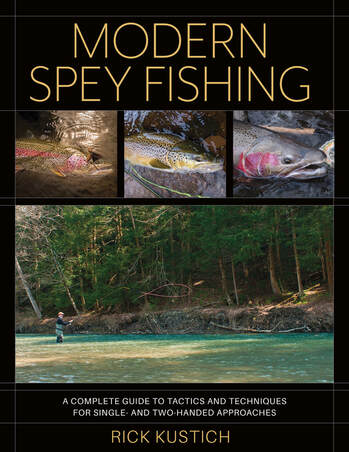
00:52:03 Rick: Yeah, I mean, you know, my most recent book, Modern Spey Fishing, really delves into, you know, that and and really how to I think the strength of that book is there’s, you know, two chapters I think are really important, but one, you know, kind of goes through all the, the rigging and uh, uh, you know, lines and terminology and everything. And I think that trips up a lot of people. I mean, I think that is a bit of a barrier, you know, because it is a, you know, a bit confusing, but once you break it down, you know, it’s not that bad. But the other one, really the other part of, you know, important chapter in there is just kind of covers the tactical strategy, you know, of the actual fishing. So I think that’s really and it really goes dives pretty deeply into controlling speed, controlling depth, you know, fishing different types of water, you know, and how to approach, uh, various structural elements and things of that nature.
00:52:55 Dave: Yeah. Awesome. No. And we will have a link to that in the show notes so people can check out the books there. Um, and as far as the you mentioned a few of these things to work on with the Spey, you know, anchor points and things like that are there, you know, again, if you couldn’t get out right away, are there videos? What do you think is a good do you think watching other anglers who are really high level experts doing video, do you think that’s a good way to learn and maybe prepare on some of this like anchor Point plays. I know when I learned I watched some of Simon Bosworth’s videos back in the day, but do you think that’s a good way to do it if you can’t have a coach with you?
00:53:28 Rick: Yeah it is, there’s no question. The key there is there’s a lot of stuff out on YouTube, you know, and, uh, following somebody that’s reputable, that’s a good instructor. That’s key. You know, I have had some clients show up that found some stuff on the internet that kind of, you know, isn’t and, you know, might kind of to me, sending them in a, you know, wrong direction. So, you know, I think just making sure that it’s a, you know, reputable instructor for sure.
00:53:57 Dave: Yep. And that’s I guess that’s one of the things too. I think that’s one of the cool things about having, you know, uh, some of these resources, like the podcast I love, is that we’re kind of listening to you, and then we can kind of say, okay, where can we go from here? What are the next steps? And I think, I think and I’m not sure actually on the video because I don’t do quite as much video, although I know there are. Do you know of any video? I’m sure. I’m not sure if you are on that much. Do you think there’s much? Or do you know who would be a good YouTube person to check out?
00:54:23 Rick: Yeah, I you know, it’s I don’t, Dave, to be honest with you, I fully intend this year to do some myself, you know, some basic stuff. Um, you know, really want to try to expand upon that. But I do know there’s some good stuff out there. I just not sure who to recommend. Yeah, definitely.
00:54:40 Dave: Well, I have a couple. I will just throw it. I’m just looking again on some videos that are out there. There’s somebody that we’ve had on the podcast. Um, Tim Arsenal is um, who is on in the bucket. Um, I know he’s.
00:54:53 Rick: Tim’s a great, great guy. Yeah.
00:54:55 Dave: You know.
00:54:55 Rick: Tim. Yeah, certainly a great instructor. And in building some fantastic lines, like I said, you know, he is one that’s building, uh, you know, lines that are trying to keep up with the modern approach and has one that isn’t, you know, kind of fits nicely into that, uh, hybrid bucket.
00:55:12 Dave: Yeah. Hybrid. Exactly. And and I’m looking at another one, Um, you know, I see Simon on here again. We all love Simon, right? He’s got. I see he’s on the new fly Fisher. It looks like he’s doing a segment. Learning how to.
00:55:23 Rick: He can’t go wrong with Simon.
00:55:24 Dave: Yeah, Simon’s great. So we got Simon. And then actually, I see a couple other ones popping up from our stuff. Uh, Jeff Putnam, um, who we did some stuff with. He’s popping out. He’s definitely got a lot of good. So there’s tons of resources out there. I think the good place to start is, like we said, we’ll direct them to your book. We’ll get a couple of these links that we talked about here, and that’ll get people going to the next step. So um, but yeah, we mentioned that I think a good one would be that masterclass is getting people so they can take a look at that. We’ll direct people there as well. So the one that you’re going to actually break out right. Again the reason this is cool is that they can take a look at that and we can go deeper. Um, well anything else? Rick, before we get out of here, you want to give a highlight before, you know it’s going to be a little while before we get to that trip, but what else in the next year do you have coming? Do you want any any other trips or any highlights of your program?
00:56:08 Rick: Oh, you know, I’m just really looking forward to, you know, another year kind of starting it out here with some tough weather, so I’ll be looking forward to spring. Um, yeah, I’m going to Alaska in June and, uh, going up to Lake Nipigon in, uh, in May and uh, hopefully have one other trip for later this fall that I’m working on.
00:56:27 Dave: So what’s Lake Nipigon? What’s that one?
00:56:29 Rick: So it’s north of Lake Superior and it has native brook trout, native lake trout. Um, the brook trout. That’s where the, you know, the world’s largest brook trout was caught out there. And they’re still, you know, some sizable fish that either live in the lake, live in the river. They they migrate down into Lake Superior. So looking forward to that. I’ve really haven’t been on a, on a, you know, a real good brook trout trip. Um, in my life, at least for that size fish, you know, and that’s the interesting thing about that. Uh, you know, the trip to mountain waters, too, is, you know, there is that opportunity there to go back up and fish for brook trout. So that’s right. I think that’ll be an interesting part of that trip as well.
00:57:12 Dave: Yeah, that’s a big I know we’ve had I know Brandon this year. Shout out to Brandon and Alex and some others listeners who are going to be on that trip. They’re definitely fired up for the brook trout because I fished for brook trout with Brandon down in Virginia, and it was great. You know, we were they were smaller fish. You know, these were little native brook trout up in the, you know, Virginia, the hills and mountains there. But yeah, I mean, mountain waters has legit big brook trout. And I think that it’s something that because there’s the Atlantic salmon are there that people focus on that. But I feel like if we can sneak away for a day or two after we get our salmon, it might be cool to find. Is that what you’re thinking, too? Would that be good to.
00:57:47 Rick: Oh, absolutely. I definitely I would definitely do that a day or two. I mean, I think that would be a really an important part of that trip.
00:57:54 Dave: Yeah. Good. Okay. Perfect. Rick. Well, I think we’ll leave it there. And we got a lot of exciting stuff to come, including the podcast, which is going to be probably coming out next month. And that’s going to be exciting because you’ve got a big guest coming up. I know who’s huge and and is this podcast now tell us as we leave it out here, is this going to be focused on? Is it going to be a little mix of you interviewing people and then also solo episodes? What do you think it’s going to look like?
00:58:15 Rick: Yes, that’s what I have planned. Definitely have. I already have a few good solo topics, I think, but it’ll also so maybe two thirds interviewing other experts and maybe one third that’ll just be me presenting a topic.
00:58:29 Dave: Okay, well, like we said, this is going to be a great year. Exciting for that. And yeah, we’ll send everybody out to Rick Comm if they want to check in with you on anything or on social. And another good one, Rick.
00:58:41 Rick: And also. Yeah. And also on Instagram. Oh yeah. Probably.
00:58:43 Dave: Yeah. Instagram is the best place. Rick.
00:58:45 Rick: Yeah, I think so.
00:58:45 Dave: Okay.
00:58:46 Rick: Yeah.
00:58:46 Dave: All right. We’ll get him out on Instagram. Like I said, we got the good little connection to the our trivia segment so they can make sure to follow you there as we answer this trivia question today. So all right Rick. Well thanks again. We’ll be in touch and look forward to that podcast.
00:59:00 Rick: Okay. Great. Dave. Yeah, I’m looking forward to that. Very excited about the upcoming year and always a pleasure talking with you.
00:59:06 Dave: All right. Hope you enjoyed that one with Rick. You can check in with Rick anytime. Let him know you’re excited about the podcast he’s got coming here. And if you have any feedback on episodes or topic ideas, definitely check in with Rick. I’m excited to get this one out here. If you want to connect with me, you can do that anytime. Dave, I would love to connect with you and, uh, and hook up some trips, uh, through Wet Fly Swing Pro this year. Definitely check into that and if you have any feedback and you haven’t checked in with me yet, uh, why don’t you do that? Send me an email. Love getting those emails. And, uh, we’re going to get out of here. It’s getting late in the night tonight, so I just want to wish you a happy evening. Happy morning or good afternoon wherever you are in the world. And we will look forward to talking to you on the next episode. We’ll see you then.
Stay tuned for Rick’s upcoming podcast series and more deep dives into musky, Spey, and big predator fishing!